What Is a Value Ladder (and How It Turns One Sale Into the Next)
Most businesses have one offer and one sales funnel. After the sale, they go quiet. The next yes never has a rung to land on.
So what is a value ladder? It is a sequence of offers that rise in value and in price, so a stranger can start small and a buyer can climb. This guide is about that marketing idea, and how it turns one sale into the next. You'll also see how a value ladder differs from a sales funnel, why it is not a value chain, the usual rungs, and a small-business picture you can copy this week. An example of the first rung, when you're ready, is our free 10-question quiz at salesladdersecrets.com/
What is a value ladder?
A value ladder is a planned sequence of offers, each one more valuable, and usually more expensive, than the one before it.
The idea is simple. A stranger should not have to buy your biggest offer first. They can say yes to something small, get a result, and then take the next step when they're ready. A buyer who already trusts you should not be left with nowhere to go.
Here is the same idea in one picture. A career coach might start with a free skills checklist, then a short paid workbook, then a group program, then one-on-one coaching. Each offer earns the next yes. That climb is the value ladder concept.

The phrase is well known in value ladder marketing. At SalesLadders™, we use the same plain idea, then go one step further. A SalesLadder™ is a sales funnel plus a value ladder: each offer has a path from first look to purchase, and each purchase should open the door to the next offer.
How a value ladder is different from a sales funnel
A sales funnel and a value ladder answer different questions. You need both.
A sales funnel is the path through one offer. It moves a person from first hearing about you to taking action, often a purchase, a booking, or a sign-up. For the classic path in plain English, start with What Is a Sales Funnel (and How It Works). For each stage, including after the sale, see Sales Funnel Stages Explained.
A value ladder is the set of offers, one above the next. It does not replace the sales funnel. It decides what the person is invited to buy after they have already said yes.
A SalesLadder™ puts the two together. Each rung has its own sales funnel. Each sale should earn the next offer, so the business is not starting from zero after every purchase. When you are ready to build the path for one rung, How to Build a Sales Funnel From Scratch walks through the steps.
In short:
- The sales funnel is how one offer is sold.
- The value ladder is how offers are stacked so one sale leads to the next.
- A SalesLadder™ is both.
A value ladder is not a value chain
People sometimes type "what is a value ladder in marketing" and get answers about a value chain. They are not the same thing.
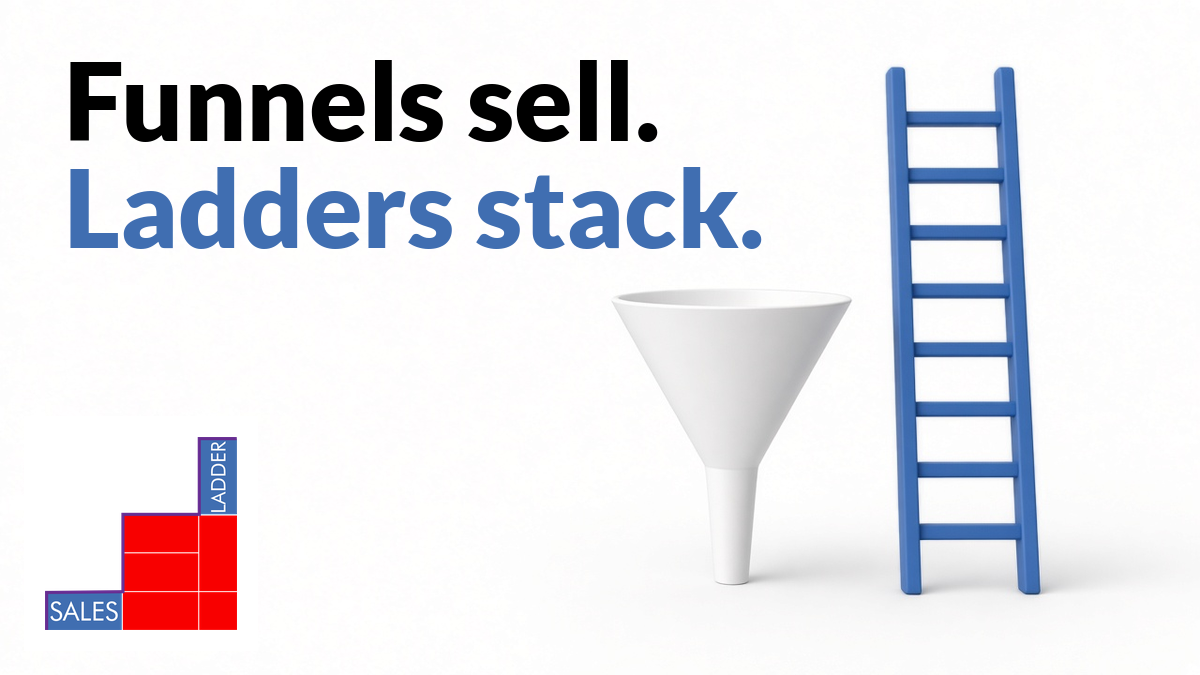
A value chain is how a company builds a product: the steps inside the business that turn inputs into something it can sell. A value ladder is how offers are stacked for the customer: the path a person can climb, from a small first step to a higher-value offer. One is an inside view of production. The other is an outside view of what the customer is invited to buy next.
The rungs, in plain words
A useful value ladder usually has three or four rungs. You can add more later.
Rung 1: a free or diagnostic first step. This is a small yes that helps someone get a result and tells you what they need next. At SalesLadders™, that first rung is the free 10-question quiz at salesladdersecrets.com/
Rung 2: a low-ticket first purchase. A small paid offer that is easy to say yes to. It turns a lead into a customer and should deliver a clear, quick win.
Rung 3: the core offer. This is the main thing you are known for — a program, a service package, a course, or a done-for-you job.
Rung 4: a higher value offer. For the people who finished the core offer and want more: coaching, a retainer, a membership, or a deeper implementation.
Two other rungs show up a lot in marketing conversations: a tripwire (a small paid offer designed to create a first purchase) and a self-liquidating offer (a paid offer designed to recover the cost of getting the lead). Both can sit on a ladder, usually as a first purchase or a paid front end.
A small-business value ladder example
This is a made-up example to show a climb you could copy this week. It is not a real business, and the prices are only an illustration.
Example: a business coach who helps solo service providers get their first consistent clients.
- Rung 1 (free): a 10-question quiz that shows which part of their client-getting process is weakest, plus a short diagnostic summary.
- Rung 2 (first purchase): a fill-in client-outreach workbook for US$27.
- Rung 3 (core offer): an eight-week group program for US$497 that helps them install a simple offer and outreach habit.
- Rung 4 (higher-touch): a 90-day one-on-one implementation package for US$2,000, for graduates who want personal help.
Notice the climb. The quiz is easy to say yes to. The workbook is a small paid step, not a jump to the most expensive offer. The group program is the core. The one-on-one offer is only for people who already got value and want more. Each rung solves its own complete problem. It is not just a teaser of the same teaching.
For more sales funnel pictures by business type, see Sales Funnel Examples: Digital Products, Online Courses and More.
To map your own rungs on paper, use the optional free sales funnel template. It includes boxes for the offers that come after the first sale.
Where people get stuck
Three leaks show up again and again.
Jumping straight to the most expensive offer. If the first thing a stranger sees is your US$2,000 package, most of them will leave. The top of the ladder is for people who already trust you. Give them a smaller yes first.
Repeating the same material on every rung. If the paid workbook, the group program, and the one-on-one package all teach the same lesson, buyers feel cheated and they stop climbing. Each rung should deliver a new result, not a longer copy of the last one.
Stopping the ladder after the first sale. This is the same leak the stages guide already flags after the sale. A classic sales funnel treats the purchase as the finish line, then the business goes back to finding brand-new strangers. The people who already bought get nothing next. A value ladder plans that next invitation in advance.
Those later rungs are also where two of the four levers live. Lead Generation and Lead Conversion get people in and help them buy once. Number of Transactions and Average $ Customer Value depend on having a next offer ready: another purchase, or a more valuable one.
Frequently asked questions
What is a value ladder?
A value ladder is a sequence of offers that rise in value and in price, so a stranger can start small and a buyer can climb.
What is a value ladder in marketing?
In marketing, a value ladder is how you stack those offers for the customer. It is not a value chain.
How do you create a value ladder?
Start with the offer you already sell. Write a smaller first step a stranger would say yes to, and a next step a happy buyer would want after that. Three or four rungs is enough to begin. Then build a sales funnel for each rung.
What are value ladder examples?
A simple picture is a free diagnostic, a low-cost workbook, a core program, and a higher-touch coaching offer. The coach example earlier in this guide is a hypothetical version of that climb. For more sales funnel examples by business type, see Sales Funnel Examples: Digital Products, Online Courses and More.
How is a value ladder different from a sales funnel?
A sales funnel is the path through one offer, from awareness to action. A value ladder is the set of offers, stacked so one sale can earn the next. A SalesLadder™ is both.
How is a value ladder different from a value chain?
A value chain describes how a company builds a product. A value ladder describes how offers are stacked for the customer.
Where does a free offer or quiz sit on the ladder?
Usually on the first rung: a useful first step in exchange for attention or an email address. The SalesLadders™ first rung is the free quiz at salesladdersecrets.com/
Where do a tripwire and a self-liquidating offer sit on the ladder?
They usually sit near the first purchase: a small paid offer after the free rung, or a paid front end designed to recover the cost of getting the lead.
Take the free quiz
You do not have to build every rung this week. You do need to know which one to build first.
Take the free 10-question SalesLadders™ quiz at salesladdersecrets.com/
To see the system as one picture, watch a SalesLadder™ come together.
